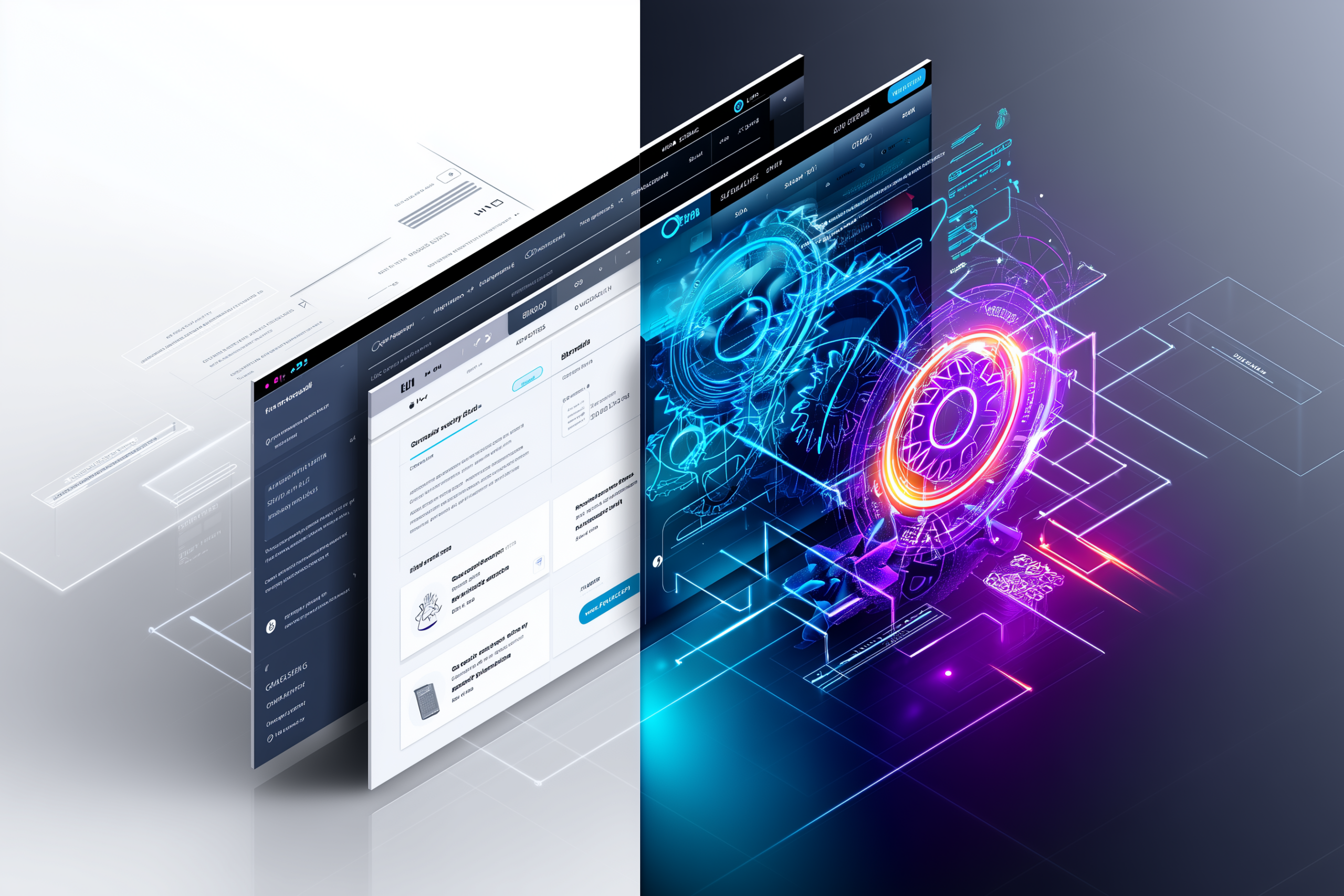
For years, digital products competed primarily through visual appeal. Interfaces became brighter, more animated, more layered, and more visually ambitious. SaaS platforms, mobile applications, fintech dashboards, and e-commerce products all tried to create a strong first impression through aesthetics. A “modern-looking” interface was often treated as proof of innovation and technological relevance. Companies invested heavily in motion design, gradients, immersive onboarding experiences, and visually complex dashboards designed to impress users immediately after opening the product.
By 2026, however, priorities inside product design have started to shift. The industry is slowly moving away from the obsession with visually impressive UI and toward something less visible but far more important: reducing cognitive load. This transition is changing how modern interfaces are designed, evaluated, and optimized. Increasingly, successful products are not the ones that appear the most visually advanced, but the ones that allow users to complete tasks with the least amount of mental effort.
Today’s users spend most of their day inside digital environments. They constantly switch between communication tools, analytics platforms, productivity software, CRM systems, banking applications, dashboards, notifications, and collaborative workspaces. As digital ecosystems become denser, users are no longer overwhelmed by information itself. Instead, they are overwhelmed by the number of micro-decisions they must make every minute while navigating interfaces.
Every interaction requires mental processing. Users must determine where to look first, which element deserves attention, what action should be prioritized, and whether certain information is urgent or secondary. Even small interruptions accumulate over time. An overloaded interface may only slow a user down for a few seconds at a time, but after hours of continuous interaction, that friction creates noticeable mental fatigue.
Older generations of UI design attempted to capture attention at all costs. Designers focused on stimulation, novelty, and visual intensity because attracting attention was considered the primary objective. Modern interface design increasingly follows the opposite philosophy. Instead of demanding attention, the best interfaces now attempt to protect it. Rather than overwhelming users with constant stimulation, they reduce friction and preserve mental energy.
This change is particularly visible in enterprise software and SaaS products. During the last decade, many dashboard-based systems became overloaded as companies added more analytics blocks, filters, floating widgets, side panels, charts, and notifications in an effort to make products appear more “powerful.” In reality, these additions often increased complexity without improving usability. Users were forced to scan large amounts of visual information before performing even simple actions.
As a result, many modern products are moving toward calmer interface architecture. Designers increasingly rely on restrained color palettes, predictable layouts, reduced visual competition, intentional whitespace, and more stable navigation systems. The objective is not minimalism for aesthetic reasons alone. Instead, the goal is to reduce mental friction and make interaction feel more natural and less exhausting.
This distinction is important because minimalist interfaces are not automatically cognitively efficient. A visually clean product can still confuse users if its structure is unclear or if navigation requires excessive interpretation. Modern UX teams are therefore focusing less on visual simplicity itself and more on mental efficiency. The most successful interfaces today are often the ones users barely notice because interaction feels intuitive and effortless.
One of the clearest examples of this shift is the growing popularity of so-called “quiet UI.” Quiet interfaces avoid unnecessary visual aggression. They rely on controlled contrast, calmer typography, subtle motion design, and predictable interaction patterns. Animation is used to guide attention rather than compete for it. Visual hierarchy becomes more deliberate and less chaotic. The interface no longer tries to dominate the user’s attention every second.
This trend also reflects a broader psychological shift among users. Digital fatigue has become a real problem across industries. Many people now associate hyperactive interfaces with stress rather than innovation. Products that once appeared dynamic and exciting increasingly feel exhausting after prolonged use. As a result, users are beginning to value stability, clarity, and emotional calmness more than visual spectacle.
The rise of AI-powered tools inside digital products has accelerated this issue. Modern interfaces now frequently include AI-generated suggestions, summaries, automations, rewrites, recommendations, and contextual assistance. While these capabilities are powerful, they also increase the number of available decisions users must process. Every additional AI action creates another layer of cognitive complexity.
Consequently, UX design is entering a new phase where the challenge is no longer simply adding more functionality. The real challenge is managing complexity without overwhelming users. This has changed the philosophy behind onboarding systems as well. Traditional onboarding often attempted to showcase every major feature immediately. Modern onboarding increasingly focuses on reducing cognitive pressure during the first interaction. Instead of presenting complete product tours, successful systems guide users toward one clear action at a time, gradually revealing additional functionality only when necessary.
This approach is closely related to the concept of progressive disclosure, which has become increasingly influential in interface design. Progressive disclosure allows products to hide complexity until it becomes contextually relevant. Users only see the tools and information necessary for their current task. Additional features appear later based on user behavior and workflow progression. This significantly reduces mental overload and improves the overall sense of clarity inside the product.
The shift toward cognitive efficiency is also influencing visual branding. Many companies are moving away from aggressive gradients, excessive glassmorphism, overly dynamic motion systems, and highly saturated interfaces. Instead, visual identities are becoming calmer and more restrained. This does not mean brands are abandoning aesthetics. Rather, aesthetics are evolving toward emotional comfort and long-term usability.
This transformation is especially noticeable in fintech and enterprise software. A few years ago, many platforms attempted to appear technologically advanced through dense dashboards and highly animated interfaces. Today, many of those same products are becoming visually quieter and structurally simpler. Companies increasingly recognize that users do not want interfaces that constantly compete for attention. They want interfaces that reduce mental fatigue and allow them to focus on actual tasks.
In the coming years, reducing cognitive load may become one of the most important KPIs in UX design. Retention, engagement, and conversion metrics will remain important, but mental efficiency may become equally valuable. Design teams are beginning to understand that successful interfaces are not necessarily the ones with the most features or the strongest visual identity. Instead, successful products are those that minimize unnecessary mental effort while maintaining clarity and functionality.
Beautiful UI still matters, but the definition of beauty is changing. Increasingly, beauty inside digital products is associated not with visual complexity, but with emotional calmness, clarity, and ease of interaction. The next generation of interface design will likely focus less on visual spectacle and more on invisible optimization of human attention. In a world already saturated with notifications, dashboards, alerts, and constant digital stimulation, that shift may become one of the most important transformations in modern product design.